Milky Way Miner And Alien Worlds Go Boldly Where No Game Has Gone Before!
July 31, 2025
Congrats! You’re launching a new game! You know a robust “backend” is absolutely vital for effective liveops, which is the key to long-lasting success. What next?
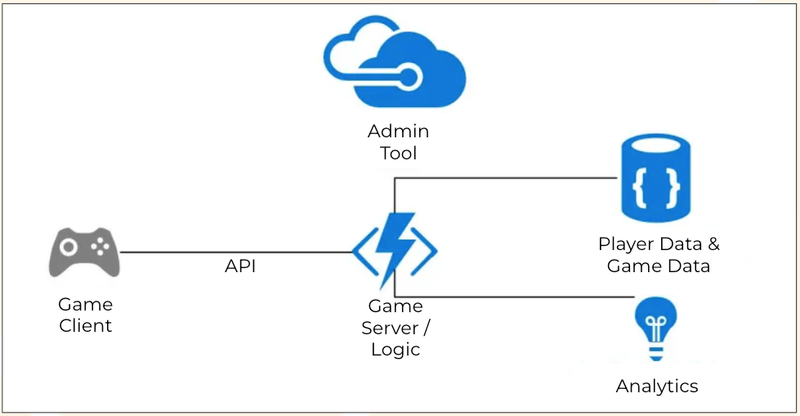
The core purpose of a backend is to make your game run smoothly and allow your team to manage the game effectively. A backend typically has these major components:
- Game Server: Handles game logic and coordination, often built with languages like PHP, C#, Java, NodeJS, or Golang on “serverless” cloud services or virtual cloud servers on providers such as AWS, Google Cloud Services, or Azure.
- Database: For storing player and game data using systems like MySQL, Postgres, DynamoDB, or MongoDB… Maybe with a separate database for Big Data/Analytics.
- Admin Tools: A web-based dashboard (typically AngularJS or ReactJS) for your team to manage the game economy, variables, balancing, store pricing, and offers.
- Analytics : The ability to reliably dig in and see what your players are doing, buying, enjoying, or struggling with.
A good backend enables key features:
- Server Logic: The single source of truth for game rules.
- Matchmaking and Multiplay Ability : If the game is multiplayer, the backend helps get the right people in the right lobby together and makes sure they are swiftly and fairly playing against each other in the same game world.
- Player Account Management: Authentication of accounts with all play history, game state, inventory of virtual currency and in-app purchases, and all key gameplay stats.
Cloud Save: Provides cross-platform player progress saving, allowing for your players to move to new devices and enabling play between different devices/platforms.
Security: Ensures data integrity and protection. Ensures it’s not elementary to cheat to win, mess up other players’ experiences, or grab free virtual currency.
Dynamic Content: Tuning variables (economy sinks and faucets), leveling curves, timers.
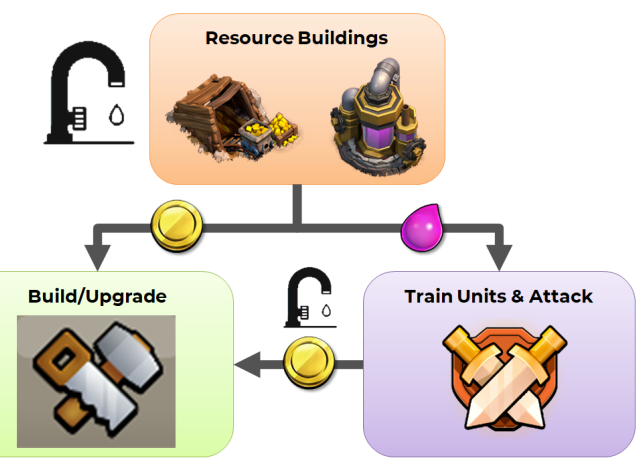
- Merchandising: Managing the cost of any coins/gems, boosts, special events, bundles, personalized offers. The main toolset for your Monetization Product Manager.

- Leaderboards: Global, friend, and clan-based leaderboards along with any rewards these give out.

- Individualized Communication: Push notifications, SMS, emails, offers, in-game popups, all broken out by segments of different players.
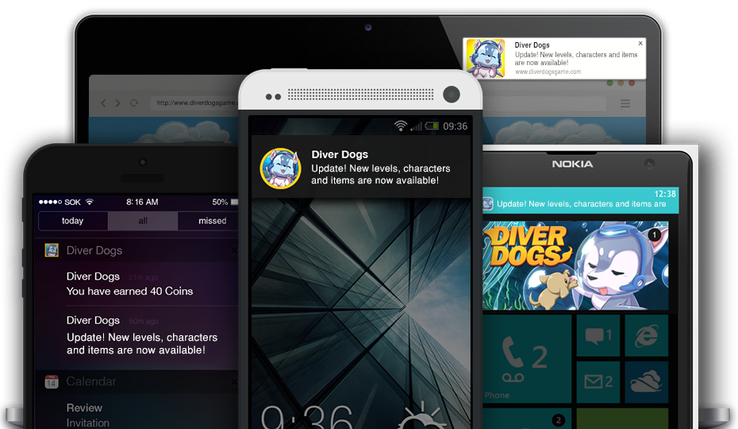
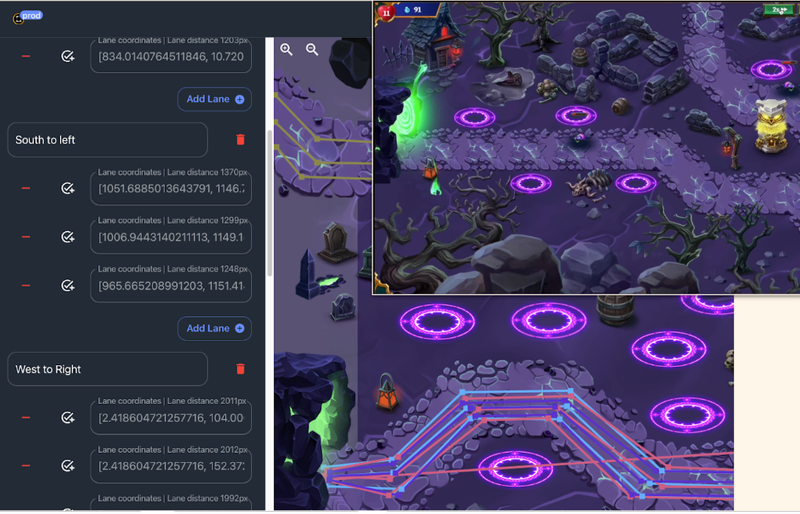
- Game Design / Level Design: Web-based tools for designers to create, tweak, and balance levels dynamically.
Social Features: Sharing scores/achievements, chat and other community features, social network integration, invites, affiliate systems, clans / guilds.
Much, Much More: Location-based gameplay, sharing and watching of game replay videos, live moderation, Web3 integration, etc. All require complex backends.
Enter the Backend-as-a-Service (BaaS)
The promise of BaaS is simple: reduce the complexity and time involved in setting up and managing your game’s backend. Your team can focus on the challenging work of creating and launching the game itself, not the very tedious – but well-defined – systems that help it operate.
Old-School BaaS
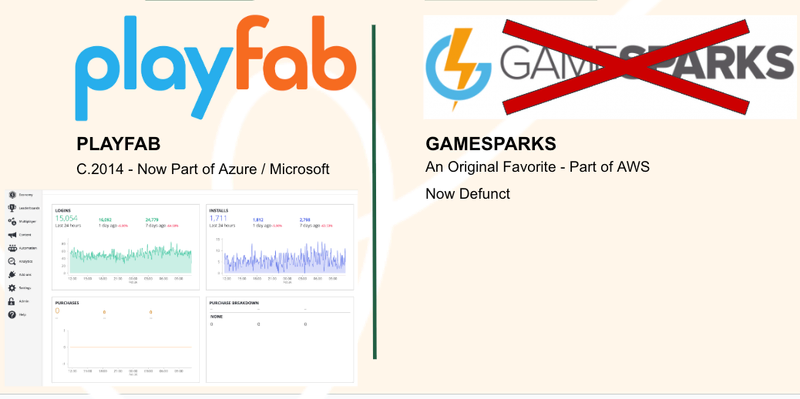
The two big original players for BaaS were PlayFab and Gamesparks, both coming onto the scene around 2013. PlayFab is now part of Microsoft Azure. It’s a mature platform offering a wide range of features. Some teams still happily use PlayFab. Many engineers we know, however, claim the support is poor and documentation / feature set is wildly out of date for modern liveops practices.
Gamesparks was an early competitor to PlayFab and eventually acquired by Amazon Web Services. It’s now defunct and serves as a good cautionary tale: When you use a BaaS to power your game there’s a chance the company will change or go away entirely, leaving you to quickly find or build a replacement.
Engine Block BaaS
Many of the preeminent game engines offer strong BaaS solutions.
- Unity Gaming Services : A suite of tools designed specifically for Unity developers, providing various services to enhance game development. Cloud save, multiplayer tools, voice chat, and account management are a few of the ready-made tools.
- Epic Online Services : A robust set of free tools from Epic Games, available for both Epic’s own Unreal Engine but also Unity, offering features like authentication, friend lists, and more. Epic Online Services is fully free and offers an incredible amount of flexibility and base functionality. It will, however, closely tie your company to Epic – for good or ill.
While Unity Gaming Services dashboards can be clunky, they may be a natural extension for existing Unity developers. Epic Online Services are cost-effective (free!), but teams often quickly outgrow the standard features and seek a more robust, customizable platform.
The New Breed of BaaS
The newer generation of BaaS companies – Beamable, Heroic Labs, Metaplay, Braincloud, Pragma, Accelbyte, Backnd, and Snapser – offer more modern approaches that mesh well with most workflows, architectures, and liveops approaches you’ll see across the top free-to-play publishers. All of the Baas companies have strong customer support, a decent track record of scaling up hit games, and more than a few success stories among their clientele.
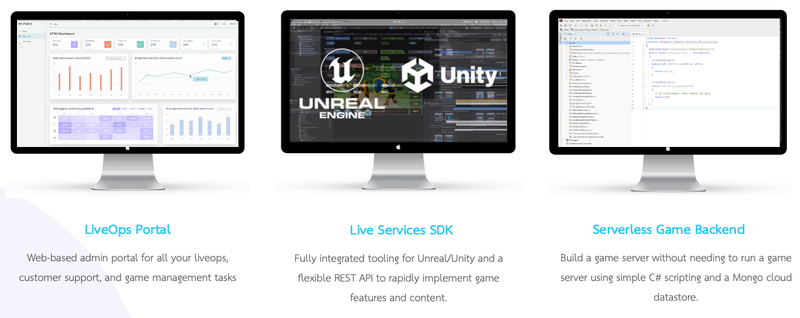
To generalize, each of these BaaS companies is broken out into three components:
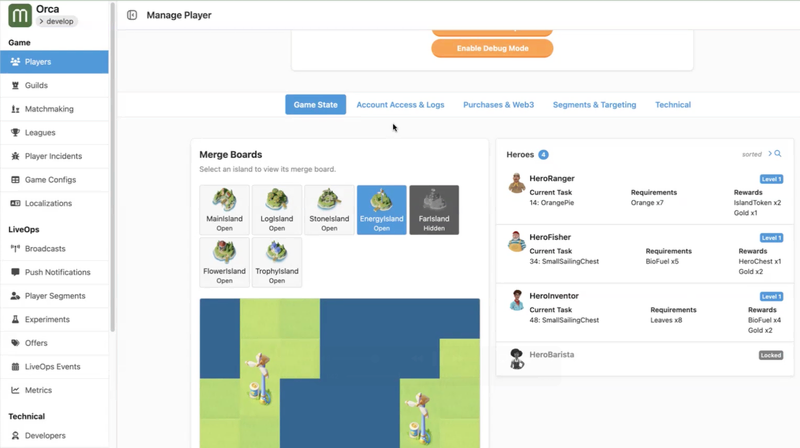
- An admin panel / dashboard where your liveops team can see what they gotta see and tweak what they gotta tweak.
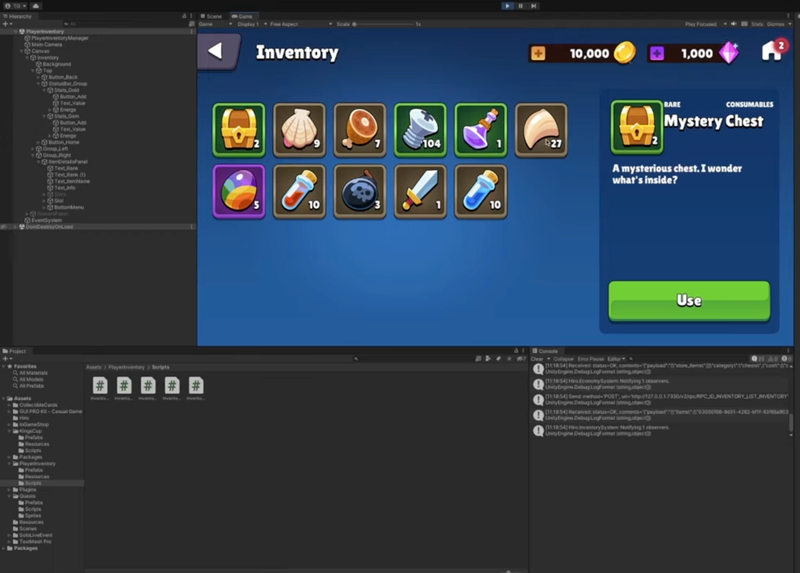
- An SDK that works in major game engines such as Unity and Unreal so the front-end game engineers can usually set up all backend services without needing a custom backend development team.
- A way to easily deploy their backend on an existing cloud provider (AWS, GCS, etc.) or configure their self-managed approach (using their own cloud service).
Almost all of the tools share the same key liveops features such as player authentication, in-game commerce and economies, event management, analytics, game content management, and leaderboards.
But you should always carefully review the full feature set. Some of the tools are better than others at advanced features:
- Multiplayer support (with different capabilities for real-time and turn-based)
- Social (friends, invites, and guilds)
- Voice chat
- Web3
- Web Payments
- Live tournaments
- Customer support
- Community tools (forums, reporting, banning)
Carefully review the ease of extending or modifying the code. While open-source licenses, like those from Heroic Labs, offer greater customization and control, they may come at a significantly higher cost than a canned package.
How to Choose?
Selecting the right backend solution depends heavily on your game’s needs and your team’s expertise. At high level we’d recommend being deliberate about your budget and goals:
- MVP/Validation: Use a minimal backend, such as a simple cloud database like Firebase, or even basic AI-generated code, to quickly validate your game idea.
- If you are a lower-budget studio but want to launch a serious Game-as-a-Service effort, partnering with a BaaS company is perfect.
- If you’re a large publisher with an extensive team and huge budget to match, you may need to roll some of your own backend components, but often can supplement or build upon Game-as-a-Service basics.
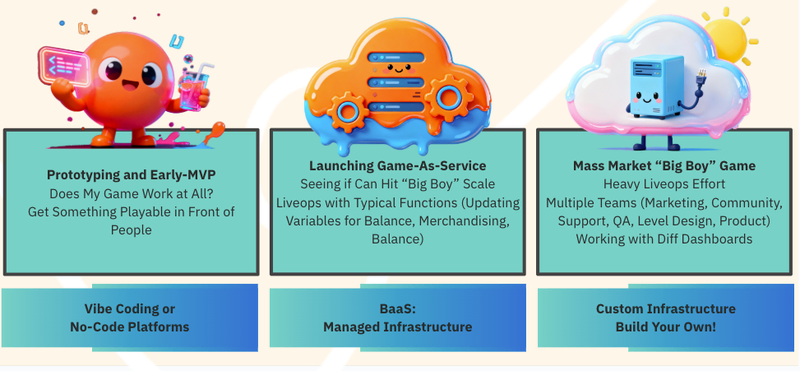
For those trying to decide which BaaS company to partner with, here’s a simplified guide:
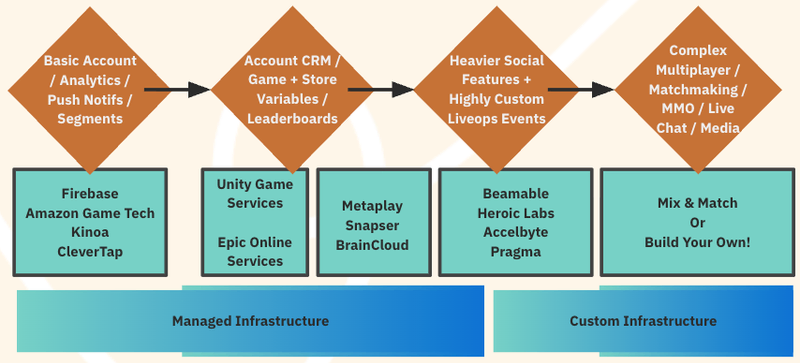
- Basic Needs: If all you need are simple player account “cloud saves” plus a handful of other “stock” tools, you should look into Unity Services or Epic Online Services and see if this covers your MVP feature set. In particular, Unity Services work naturally for Unity engineers and the EOS suite integrates very cleanly with Unreal Engine.
- Heavier Social / LiveOps: If you plan on a real liveops team and dashboard, you should investigate Metaplay, BrainCloud, Snapser, which get you going “out of the box”, or products by Heroic Labs, Accelbyte, Pragma, or Beamable which may require more set up but also provide more customization.
- Complex Multiplayer / MMO or Huge Liveops Operation: if you are doing something special with multiplayer or social that goes beyond the ‘industry standard’ you may need to supplement the BaaS offering with some of your own infrastructure and custom software.
It’s often beneficial to “stack” or combine various services, including infrastructure providers (AWS, GCP), multiplayer solutions (Photon, Unity MP), and BaaS platforms.
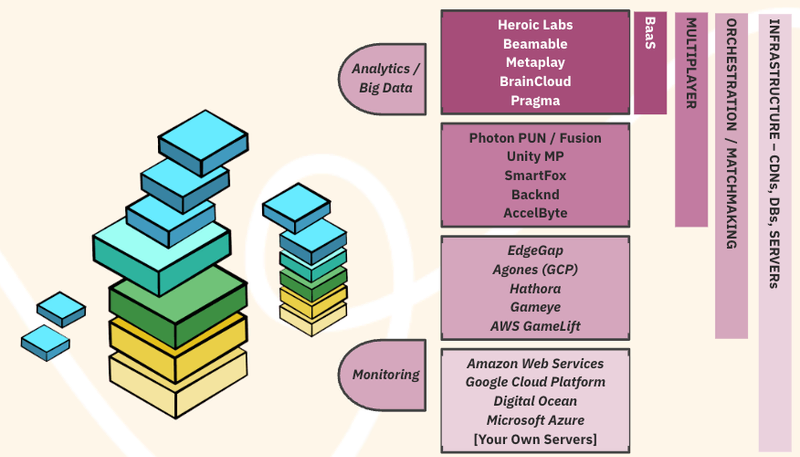
Ultimately, each BaaS company offers unique features and has really different approaches. The UX of the Admin Panel / Dashboard Experience will differ a lot and, on the front-end side, the programming language and engineering workflow assumptions can vary quite a bit.
Since your engineers and product managers will be spending the bulk of their time in these consoles and environments, it’s essential for stakeholders from your design, product, and – especially – engineering teams to test drive the BaaS you want to ensure it’s the right fit.
- Set up an account and install the SDK for any BaaS you’re considering.
- Play with a sample game or build a simple prototype.
- Plan out what’s missing and how to fill the gaps long-term.
- Cost it out as your game grows.
- Pull the trigger only after being really sure you can live happily in this world.
In Conclusion
We love BaaS! Using a BaaS, it’s truly amazing how quickly the MVP of a game can be launched and playable. A BaaS tool will immediately get you going with well-thought-through liveops features and flows – don’t need to reinvent the wheel for best practices.
Pretty much all Baas Companies have a free trial period and costs vary after that, but usually are quite modest for smaller-scale operations.
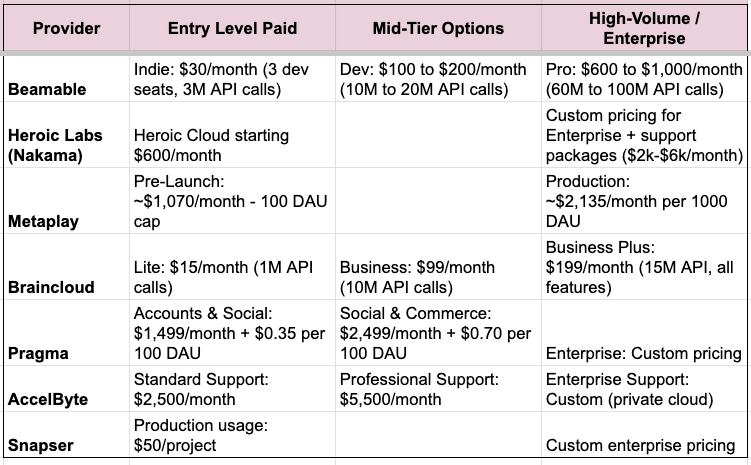
While working with a BaaS is often the correct move for a smaller or starting-out game studio, tying your company fully to a BaaS has a few drawbacks:
- “Black box” of how the architecture works may make it difficult to add new features.
- Existing UX of the dashboard may mean missing out on the fine-grained control your product or design team needs.
- There may be occasional bugs you can’t directly fix since you don’t have access to the code.
- Can be frustrating for highly experienced programmers to be forced to do things the way the BaaS prescribes.
- Service providers can disappear or be hard to reach, leaving you scrambling for business continuity.
Building a backend in-house (rolling your own) is like crafting a bespoke suit – it will fit perfectly but takes significantly more time, cost, and expertise to fashion it, sew it together, and tailor it. You’ll need developers with in-depth knowledge of various programming languages, databases, cloud providers, and networking. Plus, maintaining the infrastructure and ensuring that things are secure and scalable is a continuous effort. Every feature, update, or bug fix relies on your team’s capacity.
Costs for home-grown backend teams can look something like this, depending on number of players and whether the engineers are in a high-cost-of-living locale or not:
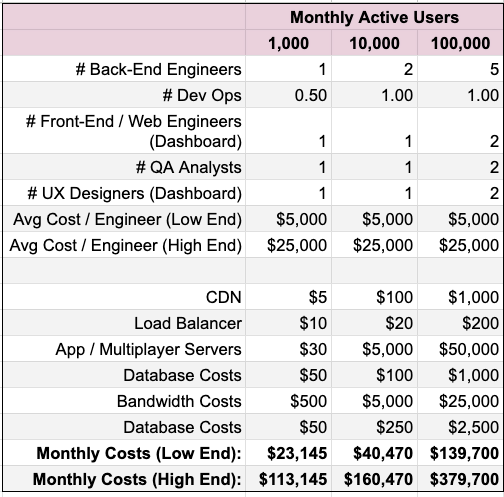
Of course, a hit liveops game will bring in multi-millions of revenue per month – so investing in the right talent to operate it is a no-brainer once a game has proven its worth.
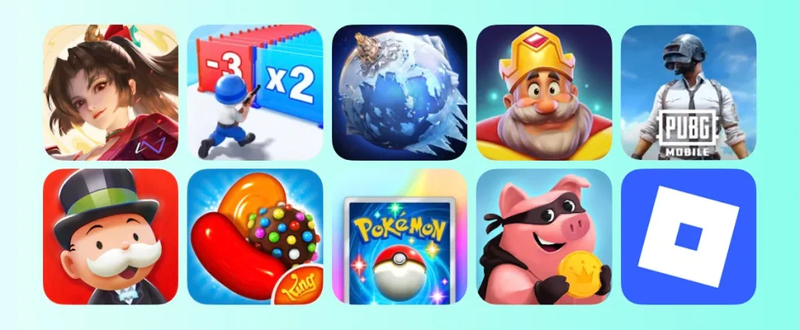
Be aware also that the majority of the top-grossing mobile games – as far as we can tell from interviews of folks at these companies – have proprietary backends. This is likely because they are making multi-million-dollar decisions each day based on collecting and interpreting the right analytics and responding in a scalable and scientific manner to their audience’s behaviors.
In the end, as a game development agency that builds different genres of games with many different clients, we often recommend that a new project swiftly go to market with a BaaS, then graduate to a hybrid approach once the game’s business is validated.
- Use BaaS for the initial development and soft launch phase.
- Begin expanding the dashboard and backend with some custom services, extending the BaaS codebase.
- Later – once you know the revenue is there – supplement the BaaS with your own infrastructure and liveops software, as well as build your own data warehouse and analytics to scale up to that next level.
Remember – the best backend is the one that players don’t think about at all, because the game is so fun and performs so cleanly. But to get your game business there in a sustainable manner, right-sizing your backend and doing the right research about buying vs. building is one of the most important decisions you’ll need to make.